Your dog sits perfectly the first time, every time — in the kitchen. Then you step onto the sidewalk, ask for the same “sit,” and get a blank stare, a pulled leash, or a nose buried in the nearest patch of grass. It’s tempting to read that as stubbornness. It isn’t. It’s one of the most common — and most misunderstood — obedience mistakes dog owners make, and it’s rarely the only one working against your training.
Below are the seven mistakes that most consistently stall obedience progress, why each one happens, and how to fix them using positive reinforcement methods that actually hold up in the real world.
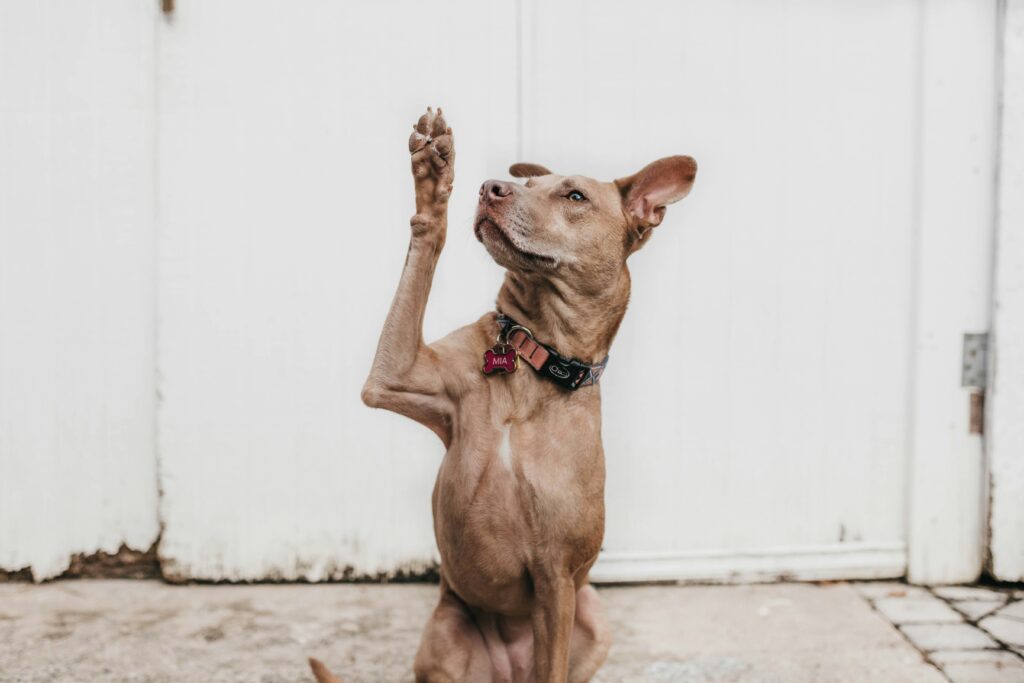
Why Your Dog “Knows” Sit at Home but Ignores You Outside
Dogs don’t generalize learning the way people do. A behavior trained in one room, in one tone of voice, with one set of smells and sounds, is initially tied to that exact context — not to the word itself. Ask for the same cue somewhere new, with new sights, smells, and sounds competing for attention, and your dog isn’t ignoring you; they genuinely haven’t learned that “sit” applies everywhere yet.
This single misunderstanding sits underneath most obedience frustration, which is why it opens the list below — but it’s rarely acting alone. Inconsistent handling, poor timing, and an over-reliance on treats or corrections usually compound the problem.
The 7 Obedience Mistakes Standing Between You and a Reliable Dog
1. Training Only at Home and Skipping Generalization
Practicing exclusively in a quiet living room builds a “home-only” skill, not a reliable one. The nonprofit animal welfare organization FOUR PAWS notes that trained behaviors need to be practiced repeatedly across different environments and circumstances before a dog can perform them reliably at any time. Skipping that step is the single biggest reason a well-behaved house dog turns into a distracted stranger on the block.
The fix: Once a cue is solid indoors, move training to the doorway, then the hallway, then the yard, then a quiet stretch of sidewalk — layering in one new environment at a time. If your household is working through this stage with a puppy specifically, puppy obedience program is built entirely around proofing cues against real city distractions like lobbies, elevators, and crowded sidewalks, which is exactly the gap most home-only training leaves open.
2. Inconsistent Cues and Mixed Signals from the Household
If one family member says “down” for lying down and another says “off” for getting off the couch, or if a cue is sometimes enforced and sometimes ignored, your dog isn’t being defiant — they’re trying to decode a moving target. Inconsistent rules and cue words are one of the most frequently cited obedience mistakes across professional trainers, and for good reason: dogs learn through repetition, and repetition only works if the pattern stays the same.
The fix: Pick one word per behavior, one hand signal if you use them, and get every person who interacts with the dog using the same script. Write the household’s cue list somewhere visible if that helps enforce it.
3. Cue Nagging — Repeating Commands Until Your Dog Complies
Saying “sit… sit… SIT” trains your dog that the first two cues are optional and only the third one counts. This pattern, sometimes called cue nagging, quietly teaches dogs to wait you out rather than respond immediately.
The fix: Ask once. If your dog doesn’t respond, that’s information — the environment is too distracting, the behavior isn’t proofed at that difficulty level yet, or the reward isn’t motivating enough — not a cue to repeat yourself louder or more often.
4. Mistiming the Reward (or Skipping It Entirely)
Timing is one of the most technical parts of positive reinforcement training, and it’s also one of the easiest to get wrong. A reward delivered a few seconds late can accidentally reinforce the wrong behavior — for example, praising a “sit” after your dog has already stood back up teaches them that standing up is what earned the treat.
The fix: Reward the instant the correct behavior happens, or use a marker word or clicker to bridge the gap between the behavior and the treat arriving. Precise timing is one of the clearest, most fixable differences between owners who plateau and dogs that progress quickly.
5. Never Fading the Treat Lure
Treats are an excellent teaching tool, but a dog that only ever performs when a visible treat is in your hand hasn’t actually learned the cue — they’ve learned to follow food. Owners who never transition from a treat lure to a real reward schedule often mistake this stage for the finished behavior.
The fix: Once a behavior is reliable, start rewarding intermittently rather than every single time, and move the treat from your hand to your pocket so the cue — not the food — becomes the trigger.
6. Leaning on Corrections Instead of Reinforcement
It can feel faster to correct a dog out of an unwanted behavior than to build a wanted one from scratch, but the evidence doesn’t support that shortcut. The American Veterinary Society of Animal Behavior, a nonprofit group of veterinary and doctorate-level animal behaviorists, states plainly that current scientific evidence supports using only reward-based methods for all dog training, including behavior problems. Their position statement also warns that punishment tools like choke, pinch, or electronic collars should not be a first-line response to behavior issues, since inconsistent correction can confuse dogs about what’s actually expected of them and strain the human-animal bond.
The fix: Instead of punishing an unwanted behavior, identify what’s reinforcing it, remove that reward, and teach — then reinforce — the behavior you’d rather see instead.
7. Rushing Difficulty — Ignoring the “3 Ds”
Trainers often describe obedience skills in terms of three variables: distance, duration, and distraction. Increasing more than one of these at the same time — asking for a longer “stay,” from farther away, next to a squirrel — sets most dogs up to fail. The nonprofit Humane World for Animals (formerly the Humane Society of the United States) points out that reward timing and consistency are essential to positive reinforcement training, and that principle applies just as much to how quickly you raise difficulty as it does to how you deliver a treat.
The fix: Change only one “D” at a time. If you’re adding distance, keep duration and distractions the same until the new challenge is solid.
How to Fix These Mistakes With Positive Reinforcement
Build a Proofing Ladder for Every Cue
For each behavior your dog knows at home, list the real-world settings where you’ll eventually need it — the front stoop, the elevator, the vet’s waiting room, a busy sidewalk — and work through them in order of difficulty, only advancing once the previous step is reliable.
Get Your Whole Household on the Same Script
Consistency isn’t a one-person job. Every household member — including dog walkers, sitters, or visiting family — should use the same words, timing, and follow-through, so your dog isn’t relearning the rules depending on who’s holding the leash.
Mark First, Then Reward — Every Time
Whether you use a clicker or a marker word, the sequence matters: mark the exact moment the correct behavior happens, then deliver the reward. This closes the timing gap that causes so much confusion in mistake #4.
If you’re just starting this process with a new dog, our related post on what to do in the first days after bringing home a new puppy covers the foundational routines — including early training habits — that make these steps easier to build from day one.
When It’s Time to Bring in a Professional Trainer
Some obedience gaps are simple timing or consistency fixes. Others — particularly reactivity, fear-based behavior, or a dog that shuts down under pressure — benefit from a professional set of eyes who can read body language and adjust a plan in real time. If budget is a concern, it’s worth knowing that affordable, quality pet care options exist even for services that once felt out of reach, so cost alone doesn’t have to rule out professional support.
FAQs About Dog Obedience Training Mistakes
Why does my dog listen at home but not outside?
This is almost always a generalization gap, not disobedience. Your dog learned the cue in one context and hasn’t yet practiced it across others. Proofing the behavior in gradually more distracting environments closes this gap.
How many times should I repeat a command before my dog responds?
Ideally once. Repeating a cue multiple times teaches dogs to ignore the first few repetitions, a pattern known as cue nagging.
Do I have to give my dog treats forever?
No. Treats are most useful while a behavior is new. Once it’s reliable, shift to an intermittent reward schedule and rely more on praise, play, or other real-life rewards.
Is positive reinforcement really more effective than correction-based training?
Leading veterinary behavior organizations, including AVSAB, recommend reward-based methods as the primary approach for all dog training, citing better outcomes for both training effectiveness and the dog-human relationship.
Key Takeaways
- A dog that’s perfect at home but distracted outside is showing a generalization gap, not defiance.
- Consistency — in cues, timing, and household rules — is one of the highest-leverage fixes available.
- Reward timing and a clear plan for fading treats matter as much as the treats themselves.
- Raise difficulty one variable at a time using the distance, duration, and distraction framework.
- Reward-based methods are backed by veterinary behavior science as the most effective, welfare-conscious approach to obedience training.
