Cooking with wine is a timeless technique that can transform ordinary meals into culinary masterpieces. Whether you’re a beginner or an experienced cook, learning how to incorporate wine into your dishes can add remarkable depth and flavor. This guide will walk you through the fundamentals of cooking with wine, including how to select the right type and how it interacts with various ingredients during the cooking process.

The Magic of Cooking with Wine
Cooking with wine is like inviting a charismatic guest to your dinner party—suddenly, everything feels more sophisticated and alive. The beauty of using wine in your culinary creations goes beyond just flavor; it’s about the chemistry that unfolds in your kitchen. When simmered, wine transforms into a magical elixir that enriches sauces, elevates marinades, and enhances the natural sweetness of vegetables. It’s not just for drinking anymore; it’s the secret ingredient that turns a humble dish into culinary poetry.
Moreover, choosing between red or white wine can be an adventure in itself, akin to picking out an outfit for a first date! Each type brings its personality: the bold tannins of a Cabernet might flirt with hearty meats while the crisp acidity of Sauvignon Blanc complements lighter fare like chicken or seafood. And let’s not forget dessert—who can resist a chocolate sauce infused with port or a tawny?
Understanding Wine Types for Cooking
When it comes to cooking with wine, the age-old adage “cooking wine” is a bit misleading. While it sounds convenient, many mass-produced cooking wines are laced with salt and preservatives that can dull the flavor of your dish. Instead, reaching for a bottle you’d actually enjoy sipping can elevate your culinary creations. Think of it as inviting a friend to dinner—would you serve them something stale from the back of the pantry?
Red, white, rosé—each type of wine brings its own unique personality to your dish. Bold reds like Cabernet Sauvignon thrive in hearty stews and marinades, infusing depth and complexity akin to an unexpected twist in a good novel. On the flip side, bright whites such as Sauvignon Blanc or Chardonnay shine when paired with seafood or creamy sauces; they add zesty acidity that perks up flavors like an energizing playlist at a dinner party. Don’t shy away from experimenting! A splash of dry vermouth can work wonders in risottos or pasta dishes—after all, don’t we all deserve a little celebration in our meals?
Techniques for Cooking with Wine
Cooking with wine is more than just splashing a bit into your dish; it’s about unlocking layers of flavor you never knew existed. One technique that often gets overlooked is deglazing—once you’ve seared meat or sautéed vegetables, add a splash of wine to the pan and watch as those delicious browned bits lift off the bottom, creating a rich base for sauces. Just remember, not all wines are created equal for this purpose; aim for something you’d enjoy sipping alongside your meal, as it will shine through in the final product.
Another nifty trick is adding wine early in the cooking process to tenderize meats and infuse depth. An acidic white like Sauvignon Blanc can work wonders on chicken or fish, while a robust red such as Cabernet Sauvignon suits hearty beef dishes perfectly. But let’s not forget dessert! Reducing sweet wines like late harvest Riesling into syrupy glazes can elevate poached pears into an elegant finish worthy of any dinner party. So whether you’re dressing up weeknight pasta or impressing guests at your next soirée, let wine guide your culinary creativity—it’s time to unleash your inner sommelier chef!
Common Mistakes to Avoid When Cooking With Wine
One common pitfall when cooking with wine is treating it like just another ingredient. Unlike water or broth, wine carries its own personality and can dramatically alter the flavor profile of your dish if not handled correctly. For instance, many home cooks throw in a bottle of their favorite red without considering how its tannins and acidity might clash with the other components in a stew. Instead, take a moment to choose your wine as carefully as you would any main ingredient; think about the complementary flavors and aim for balance.
Another mistake is overcooking the wine, which can strip away its fruitiness and leave behind only harsh alcoholic notes. To avoid this misstep, it’s essential to allow your dishes to simmer gently after adding wine instead of letting them boil vigorously. This not only helps retain those delicate flavors but also allows you to appreciate every drop that goes into your masterpiece. Remember, cooking with wine should feel like dancing—slow down enough to enjoy each step rather than barreling through at full speed!
Creative Recipes Featuring Wine
Cooking with wine is like adding a touch of magic to your culinary creations. Take, for instance, a rich Coq au Vin. This classic French dish transforms humble chicken into an opulent feast by marinating it in red wine, giving the meat depth and flavor that’s simply hard to resist. And let’s not forget about the leftover wine! Instead of letting it gather dust at the back of your pantry, why not whip up a savory risotto? A splash of white cooking wine during the slow stir adds acidity and brightness that elevates this creamy comfort food from ordinary to extraordinary.
For those days when you crave something lighter yet still indulgent, try tossing together an enchanting pasta primavera. Drenching seasonal vegetables in cooking wine while they sauté brings out their natural sweetness while providing a delightful tang without overpowering the dish. Pair this with just a drizzle over some grilled shrimp or chicken for that perfect balance on your plate—your taste buds will thank you! So next time you open a bottle for dinner, remember: cooking with wine isn’t just about infusing flavors; it’s about creating unforgettable experiences around the table! Cheers to inspiring dishes!
Storing and Using Leftover Cooking Wine
When it comes to storing leftover cooking wine, don’t fret; you’re not destined for a life of wastage and guilt! Think of your leftover bottle as an evolving ingredient rather than a mundane remnant. Simply cork it tightly, or better yet, transfer it into an airtight container if you’re venturing past the initial week after opening. As long as you keep it in the fridge, most wines can be used for up to a month without losing their flavor savvy. Just imagine all those robust flavors waiting patiently, ready to enhance your next culinary adventure!
Using that cooking wine creatively can elevate even the simplest dish into something spectacular. A splash of red in your marinara sauce adds depth that would have otherwise remained underwhelming; white wine brings out the vibrancy of steamed veggies like they just had an espresso shot! And here’s a pro tip: if you’re feeling especially frisky, reduce that wine down with some herbs and garlic into a luscious sauce—it’s basically alchemy! So don’t toss that bottle back onto the shelf with regret—embrace its potential and let each drop work its magic in your kitchen.
Final Thoughts on Cooking With Wine
Cooking with wine is like inviting a charismatic guest to your dinner table; it adds depth, intrigue, and a touch of magic to your culinary adventures. Beyond enhancing flavor profiles, wine can transform humble ingredients into remarkable dishes that tell stories with every bite. It’s not merely about pouring in a splash for the sake of tradition; it’s about understanding how different varietals interact with food, creating an alchemical dance between acidity and sweetness, tannins and fats.
Embrace the freedom that cooking with wine allows—experiment without fear! A bold red can robustly embrace hearty stews while a crisp white sings alongside delicate seafood. And remember, if you wouldn’t sip it at dinner, don’t cook with it! But don’t let that discourage you from exploring local wines or even those cheeky bottles left untouched on your shelf. Every drop opens up new horizons in flavor; just be curious and let your palate lead the way. Your taste buds—and appreciative diners—will thank you for it!
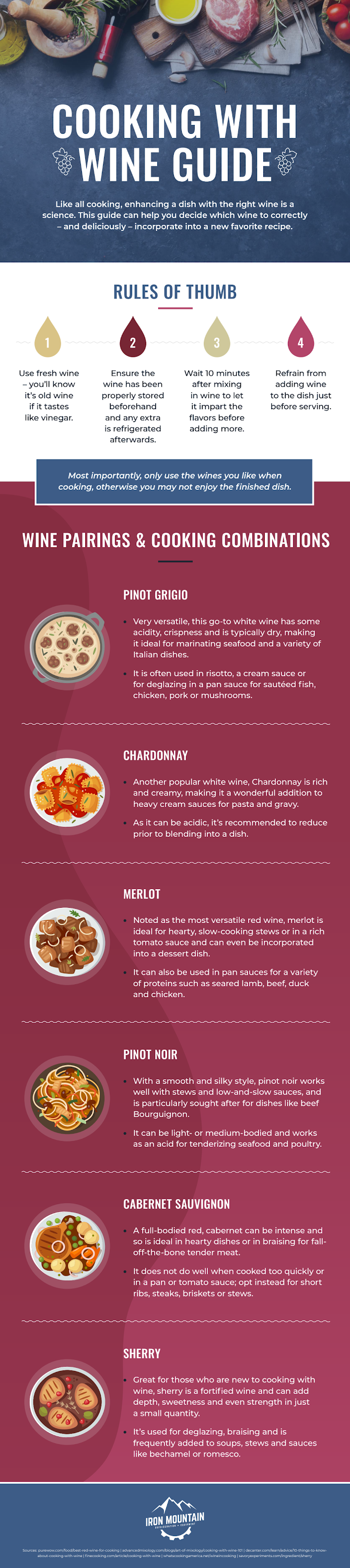
Infographic provided by Iron Mountain, a provider of a back bar fridge

2 Comments on “The Art of Cooking with Wine: A Flavorful Guide”