There’s something about a modern home that just feels fresh. Clean lines, uncluttered spaces, simple colors, natural textures, and a room that somehow looks put together without looking like you spent six hours arranging a coffee table. That last part is particularly appealing to me.
The good news is that learning how to make your home look modern doesn’t mean you need to knock down walls, replace every piece of furniture, or take out a second mortgage at the home improvement store. A few thoughtful changes can make a surprisingly big difference.
Modern design is often associated with clean lines, natural materials, streamlined furniture, and a more edited approach to decorating. (Architectural Digest) But that doesn’t mean your home needs to feel cold, empty, or like nobody is allowed to actually live there.
If your home feels a little dated or you’re simply ready for a fresh look, here are some of my favorite tips and tricks to give your home a modern feel without completely starting over.
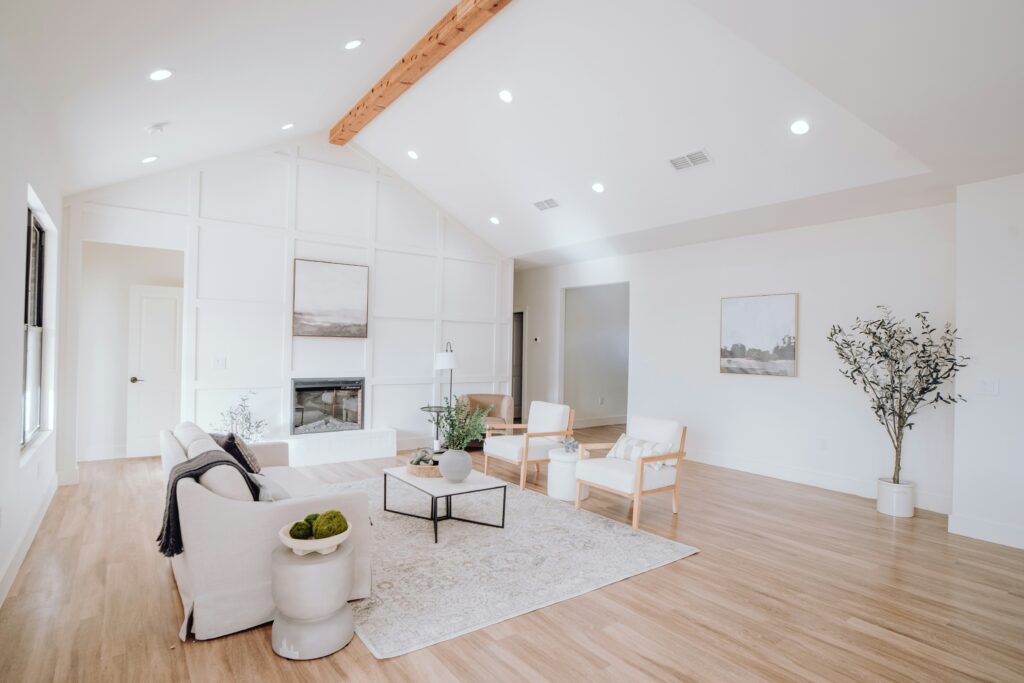
Start by Clearing the Clutter
One of the easiest ways to make your home look modern is to remove some of what is already in it. Modern spaces tend to look more polished when there is some breathing room between furniture, accessories, and architectural features.
This doesn’t mean your house needs to look like nobody actually lives there. I have never understood the perfectly staged rooms where you’re afraid to put down a coffee cup because you might ruin the aesthetic. Your home should still feel comfortable and lived in.
Instead, look around each room and ask yourself what actually needs to be there. If every surface has something sitting on it, remove a few things. If a bookshelf is overflowing, edit it down. If furniture is making a room feel crowded, consider moving or removing one piece.
Sometimes the most modern update you can make is simply giving the things you already own a little more room.
Choose a Simple Color Palette
Color can completely change the personality of a room. If you want to give your home a more modern feel, consider simplifying your color palette.
That doesn’t mean everything needs to be white, gray, or beige. Although, admittedly, those colors do make it pretty easy to create a modern foundation.
Start with a neutral base and then bring in one or two accent colors. Soft black, warm wood tones, muted greens, dusty blues, terracotta, and earthy colors can all work beautifully with neutral walls and furniture.
The trick is consistency. Instead of having every room decorated in a completely different color scheme, try carrying a few colors throughout your home. This creates a more cohesive look and can make your entire house feel more intentionally decorated.
The goal isn’t to make your home look like everyone else’s. It’s to make it feel cohesive and intentional.
Mix Modern Pieces With What You Already Own
You don’t have to replace everything to modernize your home. In fact, I think homes look much more interesting when they combine old and new.
If you have a traditional wood dresser you love, keep it. Pair it with a modern lamp. Have an older dining table? Try contemporary chairs. A vintage mirror can look surprisingly good above a sleek console table.
Mixing styles keeps a room from feeling like you ordered the entire thing from one showroom.
Before you buy something new, shop your own house. Move a lamp from one room to another. Rearrange artwork. Try a different chair in the bedroom. You might be surprised by what feels completely different simply because you changed its location.
Update Your Lighting
Lighting is one of those things we tend to overlook until we walk into a room and wonder why it feels like a dentist’s office.
Modern lighting can instantly update a space.
Look for fixtures with clean lines and uncomplicated shapes. Matte black, brushed metal, warm brass, glass, and natural materials can all give a room a more contemporary appearance.
You don’t necessarily have to replace every ceiling fixture, either. Try adding a modern floor lamp beside a sofa or a simple table lamp to a bedroom. Under-cabinet lighting can make a kitchen feel more updated, while strategically placed lamps can make a living room feel warmer and more sophisticated.
And don’t underestimate the power of warm light. A room can have beautiful furniture, but if the lighting is harsh and cold, it can ruin the whole effect.
Add More Natural Wood
Modern design doesn’t have to mean cold and sterile. One of my favorite ways to keep a modern space warm and inviting is by incorporating natural wood.
Wood can be introduced through furniture, shelves, picture frames, cutting boards, baskets, stools, or even a simple decorative tray.
The contrast between clean modern lines and natural wood creates a comfortable look that feels current without being overly trendy. If your room already has a lot of cool colors and hard surfaces, a few warm wood elements can make a noticeable difference.
Don’t Underestimate Hardware
Changing cabinet hardware is one of those tiny projects that can have a ridiculously large payoff.
If your kitchen or bathroom looks dated, consider replacing the knobs and pulls. Sleek black hardware can create a modern look, while brushed brass can add warmth and a little personality.
You can do the same thing with furniture. Replacing the knobs on a dresser or nightstand can make an older piece look completely different.
And unlike a kitchen renovation, this is a project that generally doesn’t require you to live among dust, contractors, and takeout containers for three months.
Simplify Your Window Treatments
Window treatments can either make a room feel polished or make it look like you’re still decorating according to a catalog from 1998.
For a modern look, simple is usually better.
Consider solid curtains in a neutral color, woven shades, Roman shades, or simple blinds. Choose window treatments that complement the room rather than becoming the main attraction.
If you have heavy, overly decorative curtains, replacing them with something lighter and more streamlined may instantly make the room feel brighter and more current.
Bring in Oversized Artwork
One large piece of artwork can often make a bigger impact than a collection of tiny decorations scattered across a wall.
If you have a large empty wall, consider one oversized piece that complements your color palette. Abstract artwork, photography, simple landscapes, botanical prints, or minimalist designs can all work depending on your style.
The goal isn’t necessarily to spend a fortune. You can find affordable prints, thrifted artwork, or even frame something you already have.
A large piece of art can give a room a finished appearance without making it feel cluttered.
Use Mirrors to Open Up a Room
Mirrors are an old decorating trick for a reason. They reflect light and can make a room feel larger and brighter.
For a modern look, consider mirrors with simple frames or frameless designs. Round mirrors can soften a room filled with straight lines, while large rectangular mirrors can complement a more structured space.
Try placing a mirror opposite a window to reflect natural light into the room. You can also use one above a console table, fireplace, dresser, or bathroom vanity.
Sometimes a mirror is all a blank wall needs.
Keep Your Decor Intentional
Here’s where I think modern decorating gets misunderstood. Modern doesn’t necessarily mean minimalist.
You can still have books, family photographs, plants, blankets, candles, and things that actually mean something to you.
The difference is in how you display them.
Instead of placing twenty small decorations around a room, choose a few things you genuinely love and give them some space. Group similar items together. Leave some empty space on shelves and tables. Use baskets to hide everyday clutter.
Think less “I need to fill this space” and more “What would actually make this space better?”
That small change in thinking can make decorating much easier.
Add Some Greenery
Plants can make almost any room feel fresher. They also provide an organic element that works beautifully with modern furniture and neutral colors.
If you have a green thumb, bring in a few real plants. If your gardening skills are closer to “I forgot I owned a plant,” there is absolutely no shame in choosing a realistic faux plant.
Large leafy plants can make a statement in a corner, while smaller plants work well on shelves, counters, or side tables.
You can also use branches or simple greenery in a large vase for a low-maintenance decorating option.
Pay Attention to Shape
If everything in a room is square, straight, and angular, the space can start to feel a little rigid.
Adding different shapes can make a modern room feel more balanced.
Try a round coffee table, curved chair, circular mirror, arched doorway, rounded lamp, or a vase with an organic shape. You don’t need to completely redecorate. Even one or two curved elements can soften a room.
Small details can have a big visual effect, particularly when you’re combining clean-lined pieces with organic or curved shapes.
Update Your Textiles
Sometimes a room doesn’t need new furniture. It needs new pillows.
Changing throw pillows, blankets, rugs, and bedding is an easy way to give a room an updated appearance without spending a fortune.
Look for simple patterns, textured fabrics, neutral colors, and natural materials. A chunky throw on a sofa or a textured area rug can add warmth while still keeping the overall look modern.
And if you have pillows that have been sitting on your couch since approximately the invention of cable television, this may be your sign.
Create a More Open Feeling
You don’t necessarily have to remove walls to make your home feel more open.
Start by looking at the placement of your furniture. Is everything pushed against the walls? Is there an awkward piece blocking a walkway? Is the coffee table so close to the sofa that nobody can actually walk around it?
Rearranging furniture can improve the flow of a room and make it feel more spacious.
Try creating clear walking paths and allowing furniture to sit away from the walls when the room allows for it. Sometimes a few inches can make a surprisingly noticeable difference.
Make Storage Part of the Design
Modern homes don’t have to hide every sign of real life. But having a place for everyday items can make a room look much more polished.
Look for storage pieces that are attractive enough to leave out. A woven basket can hold blankets. A simple cabinet can hide toys or electronics. Floating shelves can provide storage without making a room feel heavy.
Built-in or streamlined storage can also help keep visual clutter under control while making the room feel more intentional.
The goal isn’t to hide your entire life. It’s simply to give everything a home.
Don’t Chase Every Trend
This may be the most important tip of all.
A modern home doesn’t have to look like the latest social media trend. Trends come and go, and nobody wants to completely redecorate their house every eighteen months because their kitchen suddenly looks “last season.”
Instead, focus on timeless elements: good lighting, uncluttered spaces, natural textures, neutral foundations, comfortable furniture, and pieces you actually enjoy.
Then add trendy elements in smaller, inexpensive ways if you want to.
This is particularly helpful with paint colors, pillows, artwork, and accessories. If a trend disappears next year, replacing a throw pillow is a lot easier than replacing an entire kitchen.
A modern home should reflect the people who live there. Otherwise, you’re just creating a really attractive showroom.
Give Your Home a Modern Feel Without a Major Renovation
Giving your home a modern feel doesn’t have to involve a dramatic makeover. In many cases, the biggest changes come from smaller decisions: removing clutter, simplifying colors, updating lighting and hardware, rearranging furniture, adding natural textures, and being more intentional about what you display.
Before you start shopping, take a good look at what you already have. You may have more potential than you realize sitting in your closets, storage room, or the other side of the house.
And remember, modern doesn’t have to mean expensive, cold, or completely minimalist. It can simply mean fresh, functional, comfortable, and thoughtfully put together.
Which, in my opinion, is a pretty good goal for any home.
For more inspiration on creating a streamlined, modern space, Architectural Digest has a helpful look at contemporary interior design and its defining elements. Architectural Digest: Contemporary Interior Design
People Also Ask
How can I make my home look modern without renovating?
Start with the easiest visual changes first. Declutter your rooms, simplify your color palette, update lighting, replace outdated hardware, rearrange furniture, and add modern artwork or textiles. These smaller updates can change the overall appearance of a room without requiring a major renovation.
What colors make a home look modern?
Neutral colors such as cream, beige, taupe, white, and gray can create a modern foundation, but modern homes don’t have to be neutral. Muted greens, earthy tones, blues, black, and even richer colors can work when they’re used intentionally.
How can I modernize my home on a budget?
Start with changes that don’t require major construction. Decluttering, painting, changing cabinet hardware, updating lamps, replacing throw pillows, adding plants, rearranging furniture, and buying secondhand modern pieces can all make a noticeable difference.
Does modern home decor have to be minimalist?
No. A modern home can still be warm, comfortable, colorful, and personal. The key is creating visual balance and being intentional about what you keep on display rather than removing everything that makes your house feel like home.
Can traditional furniture work in a modern home?
Absolutely. Mixing traditional or vintage furniture with contemporary pieces can create a layered and personal look. The combination of old and new can actually keep a modern space from feeling overly coordinated or sterile.
