There’s something oddly powerful about a clean desk. Put everything in its place, clear away the mystery pile of papers, and suddenly you feel like a person who has their life together. Five minutes later, you may even start believing you’re going to answer every email before lunch.
Then Tuesday happens.
Your coffee mug is sitting on top of three notebooks, your charging cables have somehow formed a small ecosystem, and there’s a sticky note underneath your keyboard reminding you to do something you can no longer remember. If this sounds familiar, you’re not alone.
A desk has a remarkable ability to collect clutter. Because it’s where we work, pay bills, write lists, charge devices, eat snacks, and occasionally stare into the middle distance while pretending to think. The good news is that getting it under control doesn’t require a picture-perfect office or a shopping spree at the organization aisle.
A few practical desk organization tips can make your workspace easier to use, more comfortable, and considerably less chaotic. And no, you don’t have to become the sort of person who labels every drawer. Unless you want to. We don’t judge.

Start by Clearing Everything Off
Before you start organizing, take everything off your desk.
Yes, everything.
It can feel slightly terrifying at first, particularly when you discover that the object you’ve been looking for since March was sitting directly underneath your laptop. But clearing the surface gives you a blank slate and lets you see what you’re actually dealing with.
Put everything into a temporary pile or nearby area. Then wipe down the desk while it’s empty. There’s something satisfying about cleaning a completely bare surface that makes you want to immediately protect it from clutter.
Once you’ve cleared the desk, sort everything into a few simple categories: keep, relocate, toss, and deal with later.
The “deal with later” pile is useful, but proceed with caution. It can become the organizational equivalent of a junk drawer if you’re not careful.
Keep the Things You Use Most Within Reach
One of the simplest desk organization tips is to organize based on frequency of use.
Think about the things you reach for every day. Your keyboard, mouse, notebook, pens, planner, headphones, and frequently used chargers probably deserve prime real estate.
Things you rarely use don’t need to occupy the most valuable space on your desk.
If you only use your stapler twice a month, for example, it doesn’t need to sit directly beside your keyboard like it’s waiting for an important assignment. Put it in a drawer or organizer instead.
Your desk should work around your habits, not force you to constantly rearrange things just to get through the day.
Give Every Item a Home
Clutter often happens because things don’t have designated homes.
If you finish using a pen and have no idea where it belongs, it will eventually end up on the desk. Then another pen joins it. Then a highlighter. Then a pair of scissors. Before long, you’ve created a small stationery community.
Give frequently used items specific places to live.
Pens go in a cup or organizer. Documents go into a designated file or tray. Headphones have a hook or drawer. Charging cables stay in one location. Receipts have a home instead of being tucked underneath the monitor.
The goal isn’t to make your desk look like a furniture catalog. It’s to eliminate the constant question of, “Where am I supposed to put this?”
Tackle the Cable Situation
Few things can make a tidy desk look chaotic faster than a nest of cables.
Computer cables, phone chargers, headphones, monitor cords, and whatever mysterious wire came with a device you no longer own can quickly turn the back of your desk into an electrical jungle.
Start by identifying which cables you actually use. Remove old or duplicate cords if you can safely determine that you no longer need them.
Then group the remaining cables. Cable clips, ties, sleeves, or simple Velcro straps can keep cords from spreading in every direction.
If possible, route cables toward the back or underside of the desk rather than letting them run across the workspace.
You don’t need a professional cable-management system, either. Sometimes a few inexpensive clips and five minutes of patience can accomplish more than an elaborate gadget.
And if you find a cable that has absolutely no identifiable purpose, put it somewhere safe before deciding what to do with it. We all know the moment you throw away a mysterious cord is the moment you’ll discover what it was for.
Use Vertical Space
When your desk is small, don’t forget to look up.
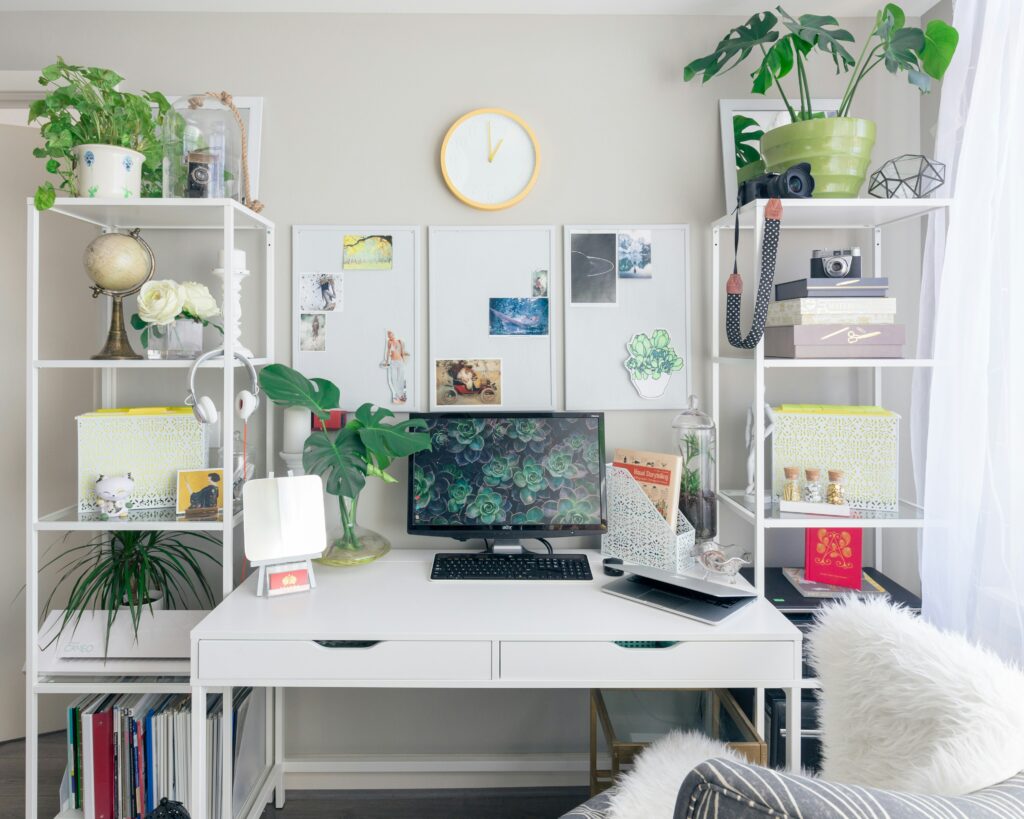
Shelves, wall organizers, pegboards, monitor stands, and small cabinets can give you storage without taking up valuable workspace.
A monitor stand with storage underneath, for example, can create room for notebooks, a keyboard, or other small items. A wall-mounted organizer can hold documents or supplies without covering half your desk.
Vertical storage is especially useful if you work from a small home office, bedroom, kitchen table, or other multipurpose space.
The more you can move storage upward, the more room you have for the things that actually need to happen on your desk.
Create a Paper System
Paper has a sneaky way of multiplying.
One receipt becomes three. Three documents become a stack. The stack eventually becomes a leaning tower that you avoid looking at because you’re reasonably certain it contains something important.
Create a simple paper system.
You might have one tray for documents that need attention, one for papers you need to keep, and a recycling bin nearby for everything else.
The important part is to avoid creating a complicated filing system that requires a 40-page instruction manual. If putting away a piece of paper takes longer than finding a place to put it, you’re probably not going to maintain the system.
Keep it simple enough that you can actually stick with it.
Don’t Let Your Desk Become a Storage Unit
Your desk is a workspace, not a warehouse.
This sounds obvious, but it’s remarkably easy to use every available inch of surface area for storage. Books pile up. Notebooks multiply. Decorative items creep in. A snack bowl appears. Then another.
Before long, your actual working space has shrunk to an area approximately the size of a dinner plate.
Try to keep some open space on your desk. You don’t need every square inch to be occupied.
A clear area gives you room to write, spread out documents, work on projects, or simply breathe. And visually, an open workspace tends to feel calmer.
Be Thoughtful About Desk Décor
A little personality can make a workspace much more enjoyable.
Maybe you like plants. Maybe you have a framed photo, a small piece of artwork, a favorite mug, or an object that makes you smile.
Keep it.
Organization doesn’t mean stripping your desk of everything that makes it yours. In fact, a completely sterile workspace can feel less inviting.
The trick is balance.
Choose a few things you genuinely enjoy rather than turning your desk into a miniature gift shop. Decorative items should add personality without interfering with the way you work.
A small plant, for example, can bring some life to a workspace without demanding its own zip code.
Create a Dedicated Charging Station
If you regularly charge multiple devices, consider creating one specific charging area.
This could be a small tray, charging dock, drawer, or section of your desk where your phone, smartwatch, earbuds, and other devices can be plugged in.
Keeping chargers in one location prevents the classic situation where you need your phone charger immediately and somehow end up searching three rooms, a backpack, and the mysterious drawer where batteries go to retire.
If you have multiple devices, label cables or use different colors to make them easier to identify.
Keep a Small Trash or Recycling Bin Nearby
This may seem obvious, but having a trash or recycling bin within easy reach can make a surprising difference.
If the bin is across the room, you’re more likely to leave receipts, wrappers, scraps of paper, and packaging on your desk “temporarily.”
And we all know what temporarily means.
A small bin beside or underneath your desk makes it easier to deal with waste immediately. Just remember to empty it regularly. Otherwise, you’ve simply created a very organized place for garbage to accumulate.
Progress, technically.
Organize Your Drawers
Desk drawers are notorious for becoming clutter traps.
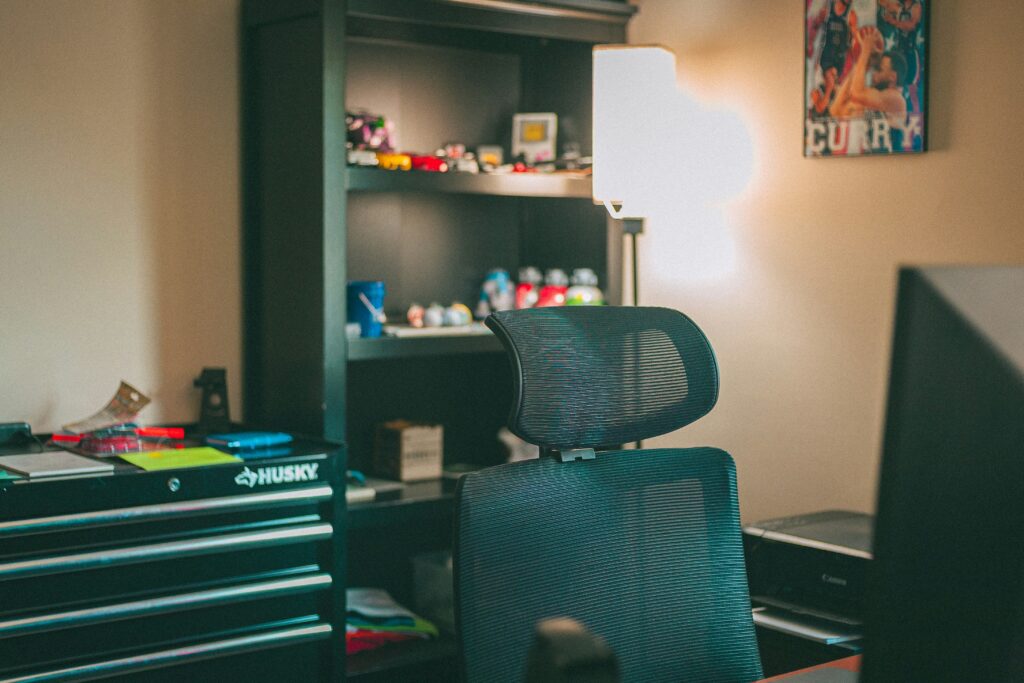
The best approach is to give each drawer a general purpose. One might hold office supplies, another personal items, and another important documents.
Drawer dividers or small containers can keep everything from becoming one giant pile.
You don’t need to arrange every paperclip by color. The goal is simply to be able to open a drawer and find what you’re looking for without excavating through a collection of pens, batteries, receipts, and something you haven’t seen since 2019.
Try the One-Minute Reset
One of the easiest desk organization tips to maintain is the one-minute reset.
At the end of your workday, take a minute or two to return items to their homes. Put away papers, throw out trash, return pens to their container, straighten your keyboard, and deal with any cups or dishes.
That’s it.
You don’t need to spend 30 minutes cleaning your desk every evening.
A tiny reset prevents clutter from becoming overwhelming. And there’s something wonderful about starting the workday with a clean surface rather than yesterday’s chaos waiting for you like an unpaid bill.
Don’t Organize What You Don’t Need
This might be the most important rule of all.
Before buying another storage container, ask yourself whether you actually need the thing you’re trying to store.
Organization can sometimes become a clever way to avoid decluttering. Instead of getting rid of things we don’t use, we buy increasingly creative containers to house them.
If you haven’t used something in months and have no realistic reason to expect you’ll need it, consider whether it deserves valuable desk or office space.
The best storage solution is occasionally getting rid of the stuff that needs to be stored.
Make Your Workspace Work for You
There is no single perfect desk setup.
Some people love minimalism. Others thrive in a workspace filled with notebooks, colorful pens, plants, and inspiration boards. Some people need everything perfectly aligned, while others operate comfortably within what can only be described as “organized chaos.”
Your system needs to fit you.
Pay attention to what causes frustration during your workday. Are you constantly looking for pens? Create a dedicated spot for them. Always losing your headphones? Give them a hook. Constantly moving piles of paperwork around? Create a paper tray.
The best desk organization tips solve actual problems rather than simply making a desk look pretty for a photograph.
Give Yourself a Five-Minute Friday
If your desk tends to unravel during the week, schedule a slightly longer reset at the end of the week.
Spend five or ten minutes clearing clutter, filing documents, wiping down surfaces, organizing supplies, and preparing the desk for Monday.
Friday is a particularly good time to do this because you can leave work knowing you’re not returning to a disaster zone.
And if you work from home, this can also help create a psychological boundary between “work time” and “I’m done now.”
Your desk should signal that the workday is over—not that you still have 37 things staring at you.
A Tidy Desk Doesn’t Have to Be Perfect
Ultimately, the goal of desk organization isn’t perfection.
It’s functionality.
Your workspace should make it easier to find what you need, focus on what you’re doing, and feel reasonably comfortable while you’re doing it. You shouldn’t have to spend half your morning searching for a notebook or moving piles around just to find your keyboard.
Start small. Clear the surface. Remove what you don’t need. Give important items a home. Tame the cables. Create a simple paper system. Then spend a couple of minutes each day putting things back where they belong.
That’s really all it takes.
And if your desk gets messy again? Don’t panic.
It’s a desk, not a museum exhibit.
Life happens. Coffee gets spilled. Papers accumulate. Projects take over. Sometimes your workspace will look less like an inspiring productivity haven and more like a detective’s evidence board.
That’s okay.
The point of these desk organization tips isn’t to create a workspace that stays perfectly clean forever. It’s to create a system that makes it easy to get back to a comfortable, functional space when things inevitably get a little messy.
Because a tidy desk won’t magically make every email disappear, finish your to-do list, or convince your boss that Friday should be a three-day weekend.
But it can make Monday morning feel just a little less overwhelming—and honestly, that’s a pretty good place to start.
