There was a time when having a home office sounded incredibly sophisticated. A room with a desk, a proper chair, maybe a bookshelf and a framed print on the wall. It sounded like the kind of room where Important Things happened.
Then working from home became much more common, and many of us discovered that a home office could also mean balancing a laptop on the kitchen counter while a laundry basket sits three feet away and someone in the house asks, “Are you almost done?”
Apparently, the dream of working from home did not include an ongoing relationship with the dining room table.
Whether you work from home every day, have a hybrid schedule, run your own business, pay bills, write, study, or simply need a quiet place to occasionally get things done, having a dedicated workspace can make a surprising difference. And creating one doesn’t have to mean spending thousands of dollars or turning your home into a miniature corporate office.
In fact, I think the best home offices are the ones that feel like they belong in the home. They should be functional, certainly, but they can also be warm, comfortable, personal, and inviting.
Your desk doesn’t have to look like it belongs in a glass-walled office building. It can look like it belongs to you.
Start With the Space You Have
The first step in creating a home office isn’t buying a desk. It’s figuring out where the office is actually going to live.
If you have an entire spare bedroom available, congratulations. You have won the home office lottery. But plenty of us don’t have an unused room sitting around waiting to become a beautifully styled workspace.
Your office might need to share a room. It might be a corner of the living room, a little nook in your bedroom, or even a section of the dining room that needs to disappear when company comes over. That’s perfectly fine. A home office doesn’t have to be an entire room to be a real workspace.
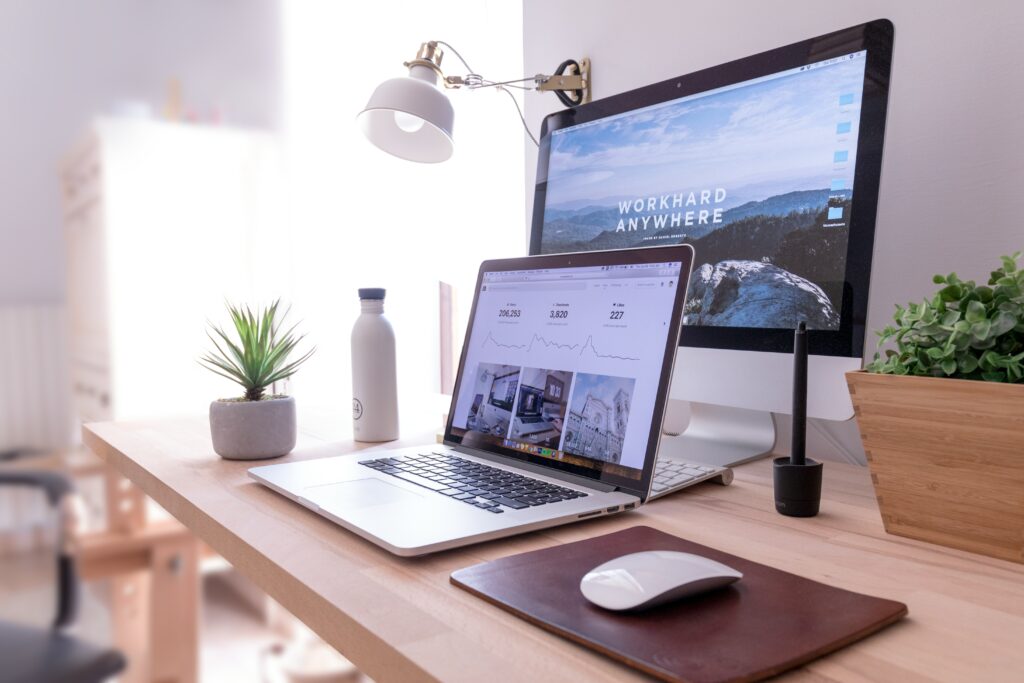
Look for an area with enough room for your desk and chair and, ideally, some separation from the busiest parts of the house. Natural light is a wonderful bonus, and if you can position your desk near a window, you may find yourself considerably happier than if you’re facing a blank wall all day.
Of course, there is one small caveat. If the view from your window involves a particularly entertaining squirrel, you may need to reconsider your placement.
Choose a Desk That Fits Your Life
A desk is the centerpiece of your home office, but it doesn’t have to be enormous. One of the easiest mistakes to make is buying a desk that’s far too large for the room simply because it looked wonderful online.
Measure your space before you shop. Then measure it again. Furniture has a sneaky way of looking much smaller in photographs than it does when it’s sitting in your house.
Think about what you actually need on your desk. Do you use a laptop? Two monitors? A notebook? A printer? A collection of paperwork that seems to reproduce overnight? Your desk should accommodate the way you work rather than simply looking good in a photograph.
If you’re working with limited space, a smaller writing desk, wall-mounted desk, or multipurpose table may work beautifully. The goal isn’t to create the biggest workspace possible. It’s to create a workspace that feels comfortable and intentional.
Don’t Underestimate a Good Chair
Let’s talk about the chair because this is one place where appearance shouldn’t win every time.
There are some beautiful office chairs available, but if you’re going to spend hours sitting in one, comfort matters. The Occupational Safety and Health Administration offers guidance on computer workstations and recommends paying attention to chair support and proper positioning. OSHA computer workstation guidance
That doesn’t mean your office chair needs to look like something from a futuristic doctor’s office. Look for something that supports you well, fits your desk height, and feels good to sit in.
If you’ve already purchased a chair that is gorgeous but feels like sitting on a wooden plank after twenty minutes, I’m not judging. I’m simply suggesting we can do better.
Let There Be Light
Good lighting can completely change a home office.
If your workspace has natural light, take advantage of it. Being able to look up from your computer and see daylight can make a room feel brighter and more pleasant. But natural light isn’t always enough, especially during darker mornings or evenings, so consider adding a desk lamp or another source of task lighting.
And don’t underestimate the personality a beautiful lamp can bring to a room. Your office doesn’t have to be illuminated by one harsh overhead light that makes everyone look like they’re being questioned by detectives.
Choose lighting that works for the way you use the space while also contributing to the atmosphere you want.
Make It Feel Like Home
This is the part I think makes a home office truly special.
You don’t have to decorate it like an office.
It’s in your home, so let it feel like your home.
Hang artwork you love. Add photographs. Put a plant on the desk. Display a collection of books. Bring in a favorite color. Add a rug or curtains that soften the room. Put something on the wall that makes you smile.
Maybe it’s a vintage map, a painting from a local artist, a framed photograph from a favorite trip, or something you’ve had for years. It doesn’t have to be expensive or trendy. It just needs to mean something to you.
One of the advantages of working from home is that you don’t have to decorate according to someone else’s corporate branding guidelines. Nobody from the marketing department is coming to confiscate your floral lamp.
Add Something Green
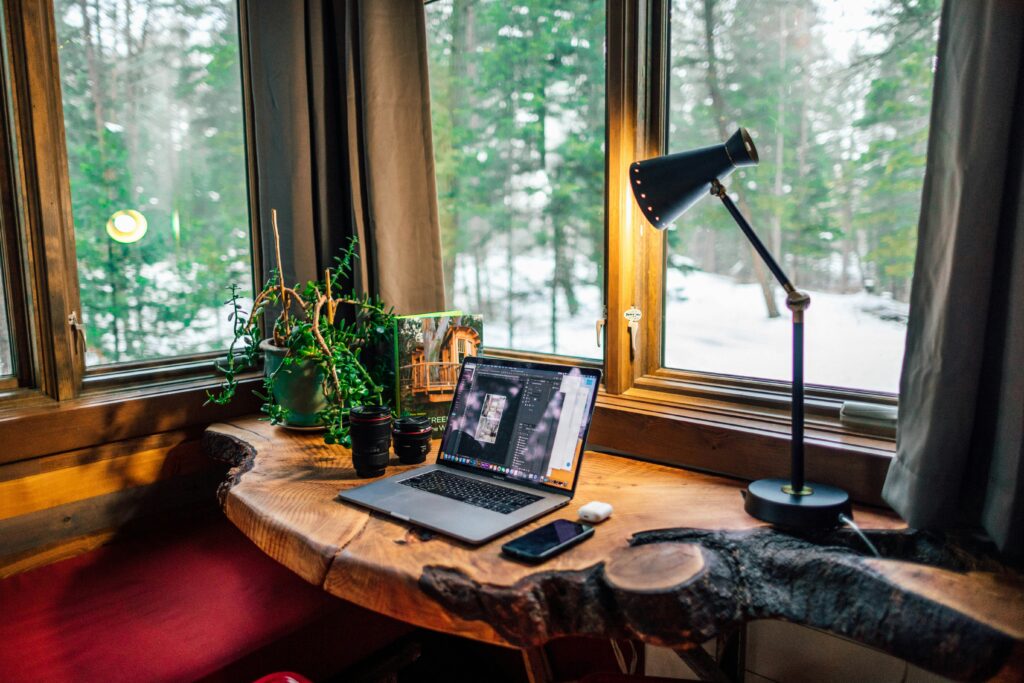
Plants have a wonderful way of making a room feel alive. Even one plant can soften an otherwise functional workspace.
If you have a green thumb, go for it. If your relationship with houseplants has been somewhat less successful, choose something low-maintenance. There is no shame in admitting that you need a plant with survival skills.
You can also bring in seasonal flowers or branches from your yard. A small vase can add color and life without requiring much effort.
The point isn’t to create an indoor jungle. It’s simply to add something natural to a room filled with technology.
Give Everything a Home
A beautiful home office can become a disaster area surprisingly quickly. One day your desk is spotless. Three days later, you’ve accumulated receipts, notebooks, pens, mail, chargers, coffee cups, two packages you haven’t opened, and a mysterious piece of paper you’re certain contains important information.
It probably doesn’t.
You don’t have to become a minimalist to keep things under control. You simply need a place for the things you use. Drawers, baskets, boxes, trays, and file organizers can keep everyday clutter contained without making the room feel sterile.
And give yourself permission to have an imperfect desk. Your workspace is meant to be used. It doesn’t need to look like nobody has ever touched it.
A five-minute reset at the end of the day, however, can make a surprisingly big difference. Clear the coffee cup, put the pens away, straighten the papers, and close the laptop. Tomorrow’s version of you will be grateful.
Use Your Walls
If your office is small, don’t forget that you have more space than just your floor and desktop.
Floating shelves can hold books, baskets, plants, and decorative objects. Wall-mounted file holders can keep paperwork from taking over your desk. A corkboard or magnetic board can give you somewhere for notes, photographs, calendars, or inspiration.
You can make the walls functional without making them look like a storage closet. Choose pieces that contribute to the room rather than simply filling every available inch.
And remember that empty wall space isn’t necessarily a problem. Sometimes a little breathing room makes a room feel calmer.
Hide the Cords
Technology is wonderful right up until the cables take over.
Laptop charger. Phone charger. Monitor cable. Printer cable. Headphones. And, of course, that one mysterious cable nobody can identify but nobody dares throw away.
Cable management may not be the most glamorous part of setting up a home office, but it can make the entire space look more polished. Use cable clips, ties, sleeves, or a cable-management box to keep things under control.
It is a small detail, but small details have a way of making a room feel finished.
Create a Little Space to Step Away
If you have room, consider adding a comfortable chair somewhere in the office. It doesn’t need to be a giant reading chair. Even a small upholstered chair can give you somewhere to read, take a phone call, think through a problem, or simply sit for five minutes.
One of the challenges of working from home is that the boundary between work and home can become blurry. Having different places for different activities can help create a little separation.
The desk is for work. The chair is for reading or taking a break. And the kitchen is for wandering into every forty-five minutes to see if anything interesting has appeared in the refrigerator.
It’s a system.
Don’t Forget the Technology
The prettiest office in the world won’t help much if your technology doesn’t cooperate.
Think about your monitor placement, keyboard, mouse, webcam, internet connection, and any other equipment you use regularly. If you work from home full-time, take some time to figure out what genuinely makes your work easier.
Maybe a second monitor would help. Maybe a laptop stand would improve your setup. Maybe wireless peripherals would eliminate some cable chaos. Or maybe you simply need a better place to put your phone so it’s not constantly distracting you.
You don’t need every gadget available on the internet. Choose technology based on what you actually use. Otherwise, you’ll eventually own a collection of expensive objects whose primary function is collecting dust.
Make Your Background Work for You
If you take video calls, your office is occasionally going to become part of someone else’s living room.
Take a look at what’s behind you. You don’t need to create a picture-perfect backdrop, but a simple wall with artwork, a bookshelf, or a plant can look lovely.
And if your office doubles as another room, consider how easily you can tidy the visible area before a call. Sometimes one strategically placed basket is all it takes to hide the evidence.
Add a Few Things You Simply Enjoy
Not everything in your home office needs to serve a practical purpose.
A pretty notebook. A favorite pen. A framed photograph. A small clock. A candle. A vase of flowers. A little bowl for paper clips. A comfortable throw.
These things aren’t necessities, which is exactly why they’re nice.
They make the room feel less like a workstation and more like a place you chose to spend time.
Your home should contain things that make you happy simply because they make you happy. Your office is no exception.
Create an End-of-Day Ritual
When your office is ten steps away, it’s surprisingly easy to keep working. Just one more email. One more task. One more thing.
Suddenly it’s 7:30 p.m., you’re still at your desk, and you’re wondering where the day went.
Create a small ritual that signals the workday is finished. Shut down your computer. Put your notebook away. Clear your desk. Turn off the lamp. Close the office door if you have one.
Then leave.
Even if your commute consists of walking twelve feet to the kitchen.
That physical act of closing up your workspace can help create a psychological boundary between work and home, and that boundary is worth protecting.
Let Your Office Evolve
There is a temptation when decorating any room to believe that we need to finish everything at once.
We don’t.
Your home office can evolve.
Start with the basics: a desk, a comfortable chair, good lighting, and the technology you need. Then live with the room for a while. Notice what’s working and what isn’t. Pay attention to where the afternoon sun falls, where clutter collects, and what you wish you had nearby.
Maybe you’ll eventually add shelves. Maybe you’ll find the perfect piece of artwork at a local shop. Maybe you’ll move the desk completely.
That’s part of making a home.
Rooms don’t have to be finished immediately. Sometimes they need time to become yours.
Create a Space You Enjoy Coming Home To
A home office is more than a desk and a computer. It’s a little piece of your home that supports a significant part of your life.
So make it comfortable. Make it functional. Make it beautiful in whatever way “beautiful” means to you.
Don’t worry about whether your office looks impressive. Ask whether it feels good to be there. Can you sit comfortably? Can you find what you need? Do you have enough light? Does the space reflect your personality? Does it help you focus when you need to?
And perhaps most importantly, does it feel like home?
You don’t need a huge room, an expensive desk, or a perfectly curated collection of office accessories to create a space you’ll love. You simply need to pay attention to what makes you comfortable and what makes the room feel like yours.
A desk can be practical and beautiful. A bookshelf can hold both reference books and novels you love. A lamp can help you see and make the room feel cozy. A plant can sit beside your computer. A photograph can remind you that there is a whole life beyond the screen.
The best home offices aren’t necessarily the ones that look the most impressive.
They’re the ones that make you want to sit down, settle in, and get started.
And when the workday is finished, you can close the laptop, turn off the light, and walk away.
Tomorrow, the desk will still be there.
Hopefully a little less cluttered.
Hopefully with a fresh cup of coffee nearby.
And hopefully in a room that makes you feel just a little more at home.
